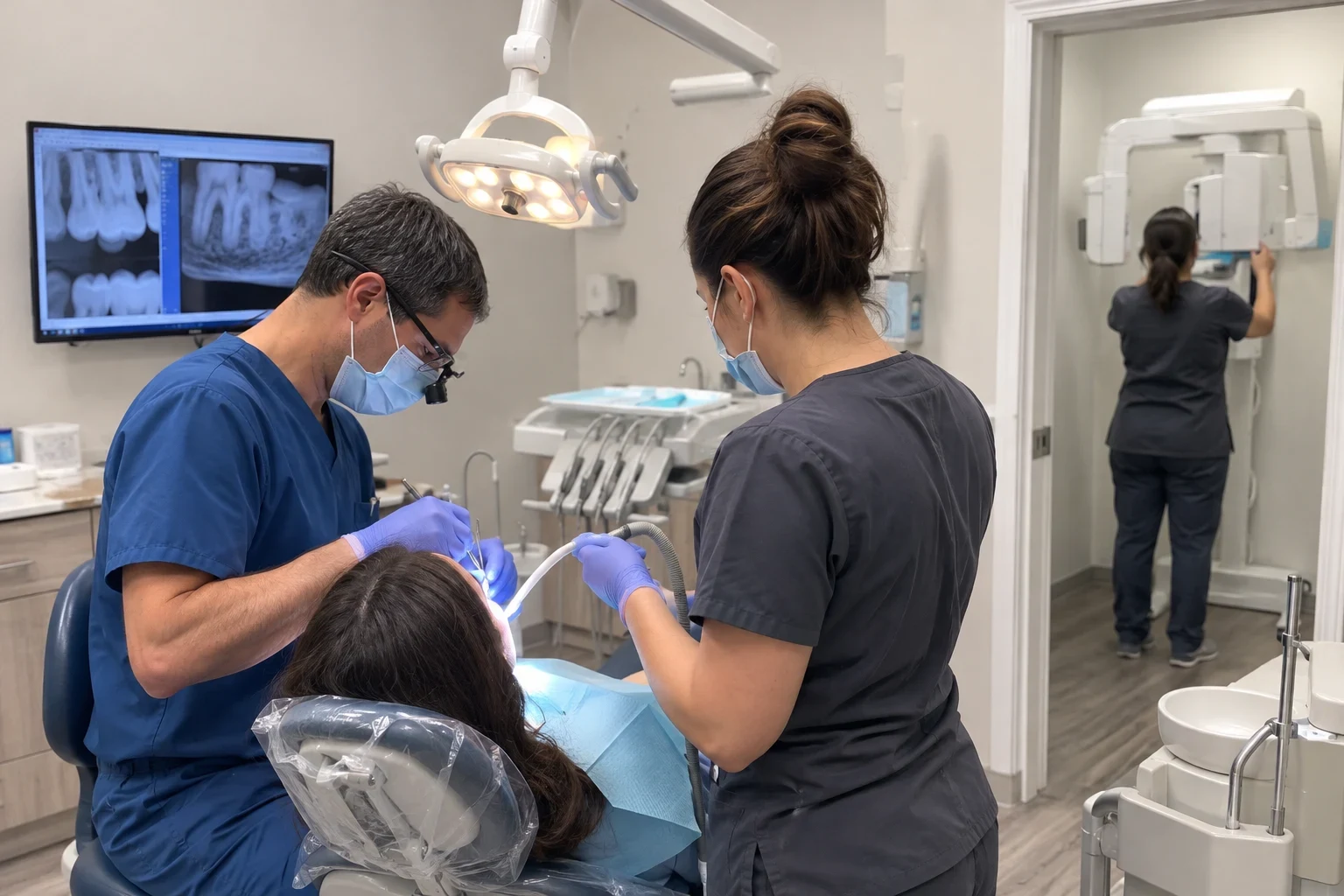
Dental Implants in Lake Dallas, Planned Carefully and Checked On After
We replace missing teeth with dental implants and implant-supported dentures. We also treat the tooth that hurts today with root canals, extractions and wisdom teeth removal. Patients come to us from Hickory Creek, Corinth and nearby towns. Once treatment is done, we check back and show you how to care for the work.
- $25 focused evaluation
- Part of 15+ PPO networks
- Interest-free payment plans
- We check in on healing
A Practice Built Around Replacing and Saving Teeth
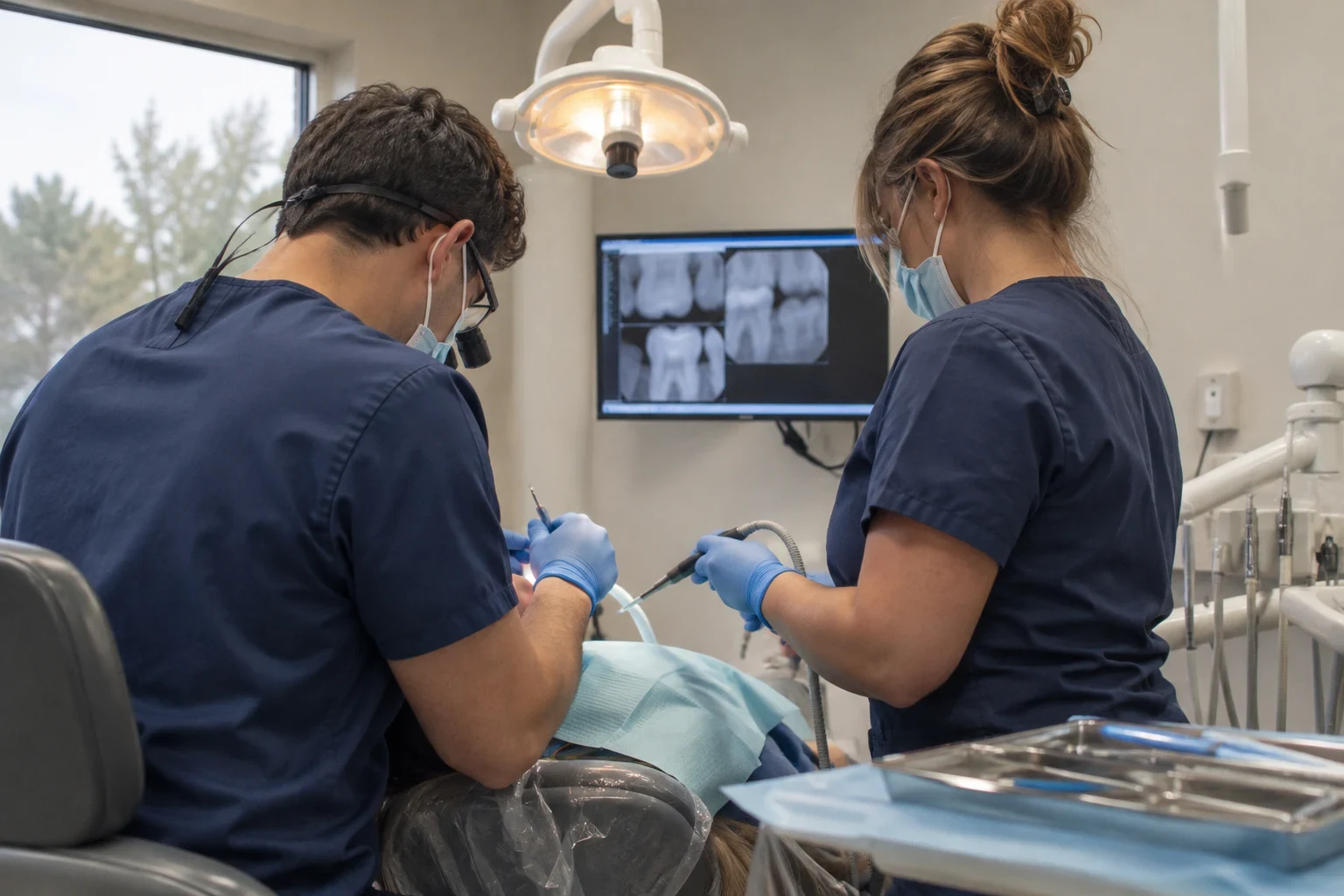
Dental Implants Lake Dallas focuses on the work people often put off: the missing molar that makes chewing awkward, the denture that slips, the tooth that has ached for weeks. We take time at the first visit because a well-planned implant or root canal is far easier on you than one that has to be redone.
We care about finish as much as function. That means shading a crown to sit quietly beside your natural teeth, shaping a denture so it fits your face, and checking the bite until it feels right. Then we stay in touch, because the way an implant is cared for in its first year shapes how it lasts.
- In business
- Over 10 years of experience in general and implant dentistry
- Certifications
- Board-certified
Dental Care for Missing, Broken and Painful Teeth
Most of our work centers on dental implants: a titanium post that bonds with the jawbone, topped with a crown shaped and shaded to match your smile. For patients missing several or all teeth, we offer dentures, including designs that clip onto implants so they stay put when you eat. When a tooth is cracked, infected or aching, we look at root canals first and extractions when a tooth cannot be saved. Wisdom teeth removal rounds out the list for teens and adults whose third molars are crowding or partly erupted.
Dental Implants
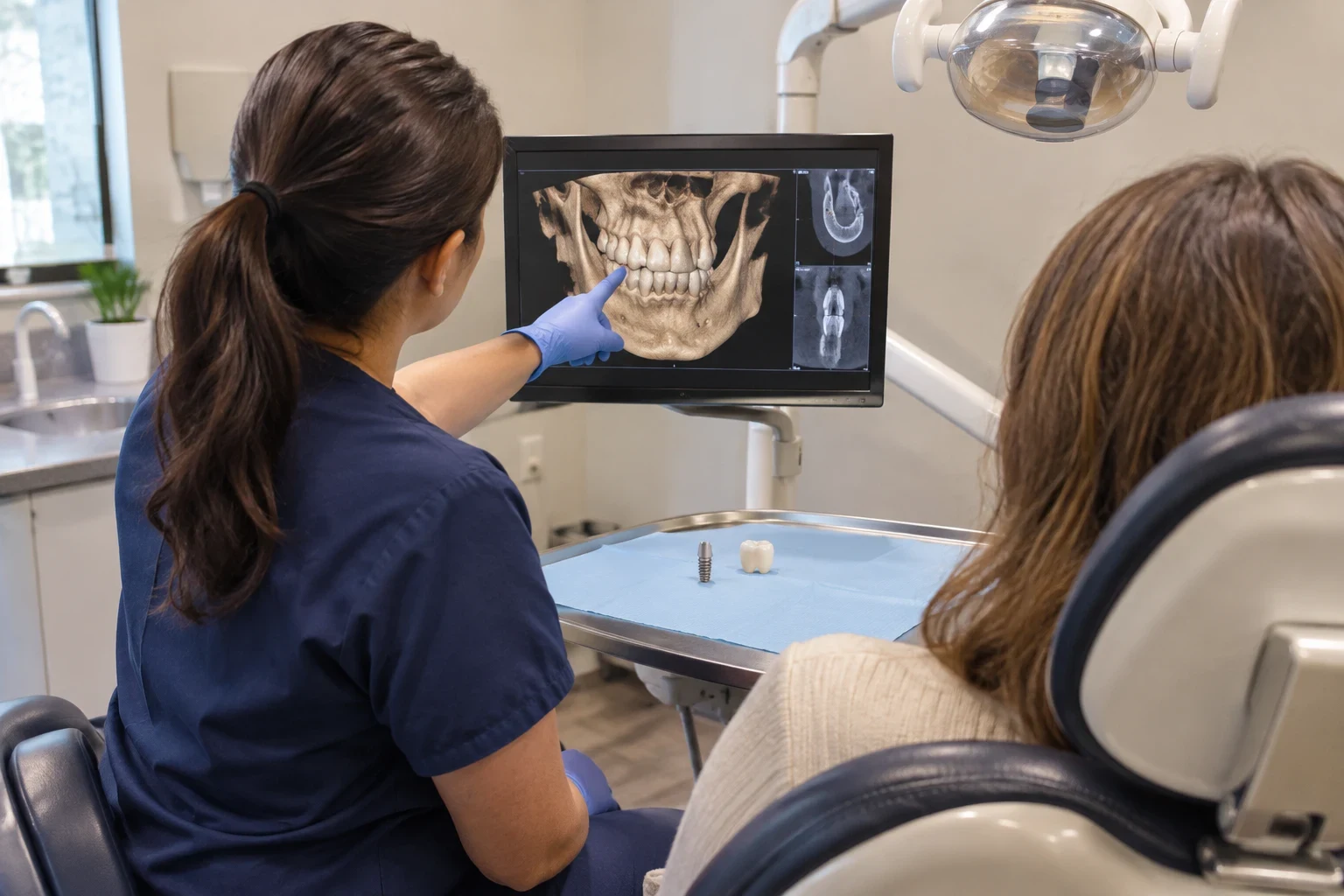
Replace a missing tooth with an implant and crown, planned from a 3D scan and followed by check-ins and clear care instructions once you're healed.
Emergency Dentistry
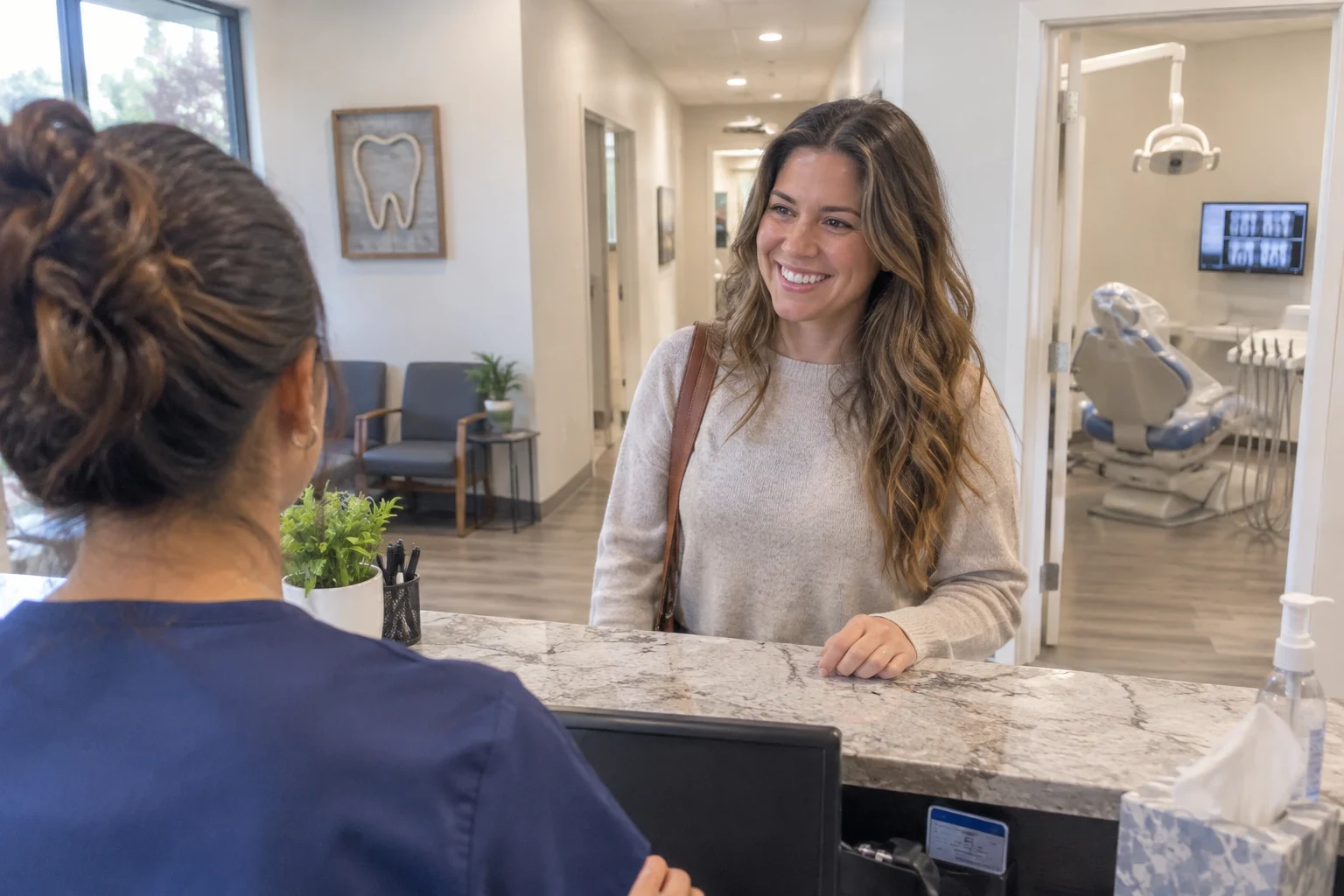
Urgent care for toothaches, cracked teeth, lost crowns and swelling, with a clear diagnosis first and a check-in afterward to see how you are healing.
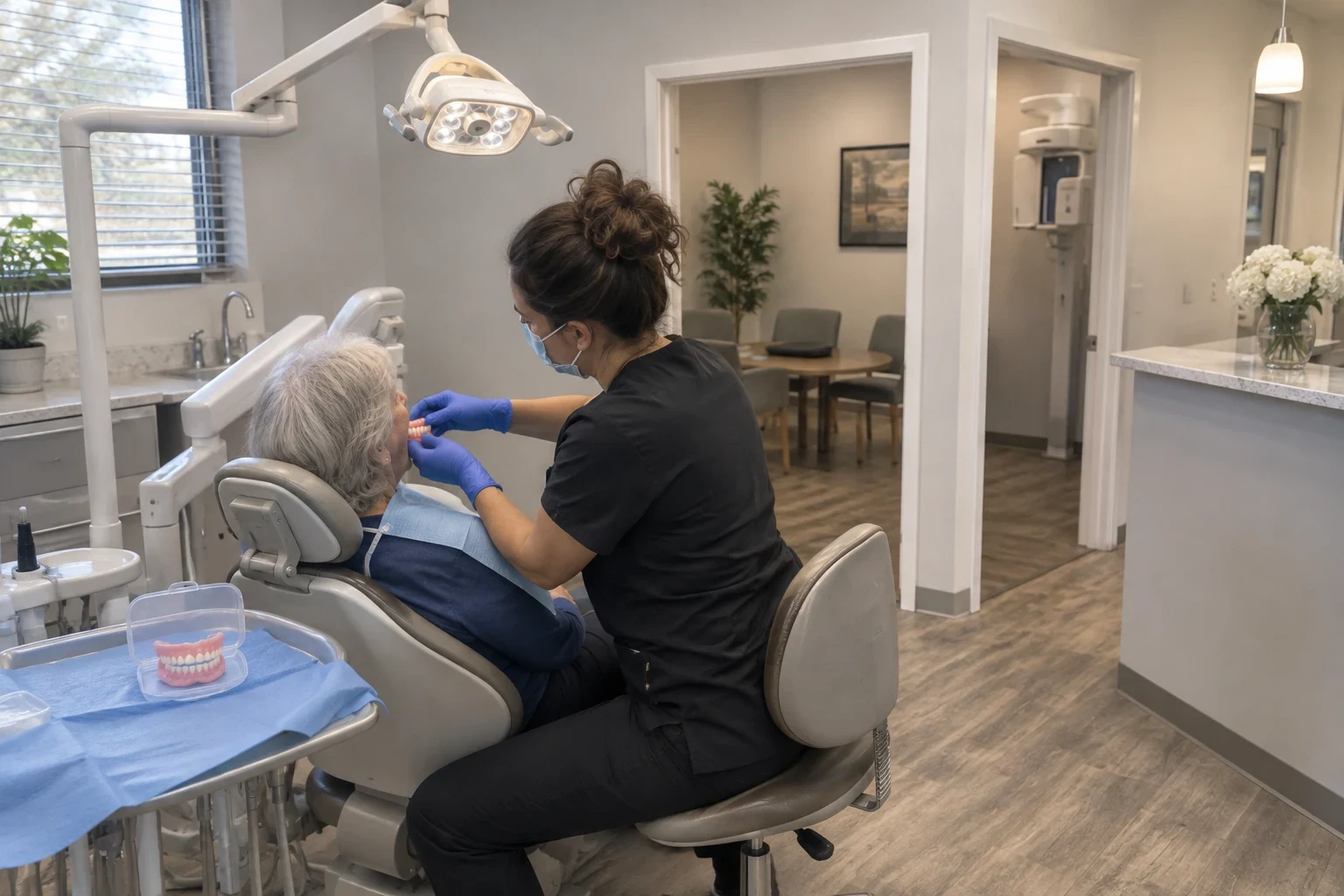
Dentures
Full and partial dentures built from careful impressions and bite records, with adjustment visits after delivery so they settle in comfortably.
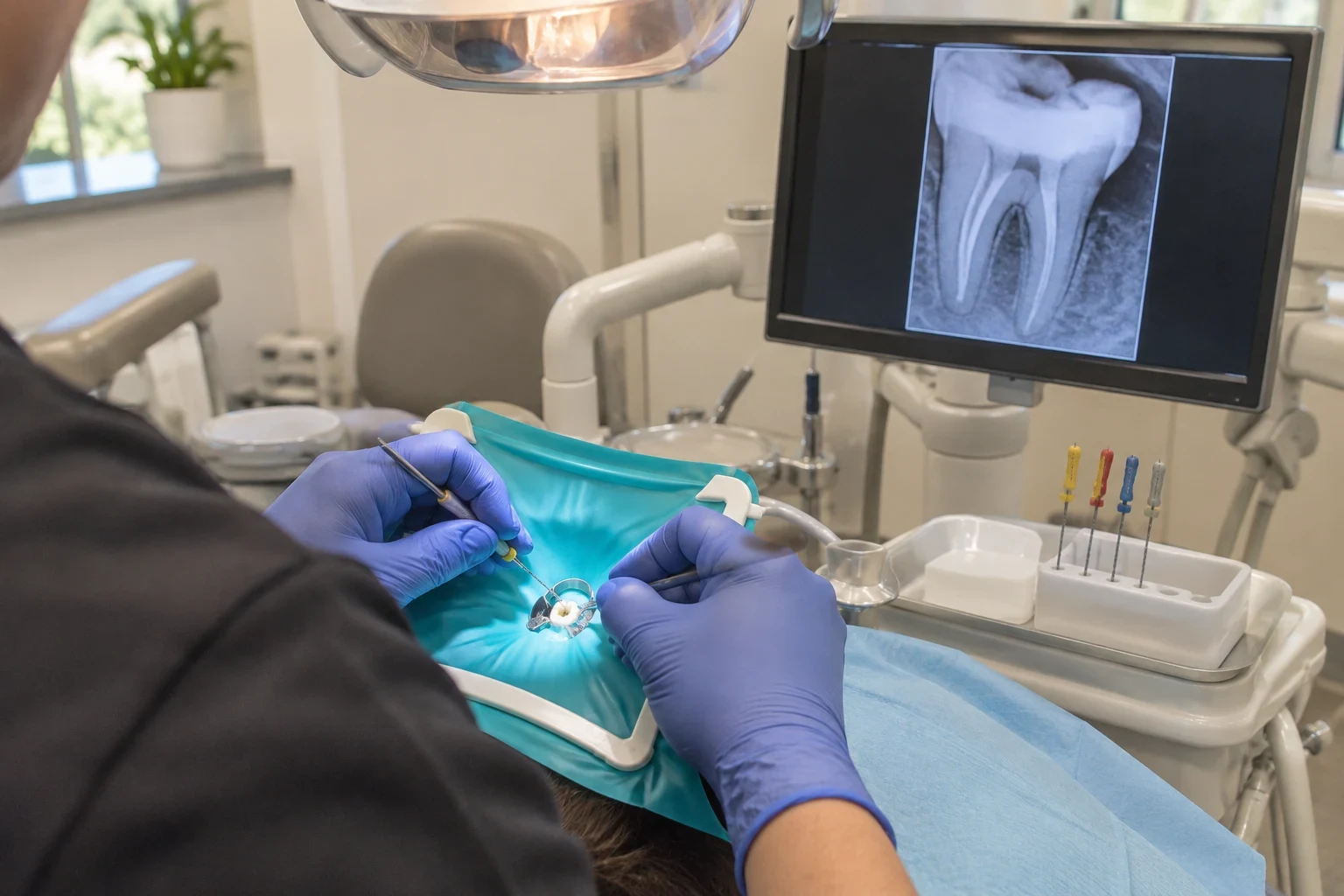
Root Canals
Gentle root canal treatment that clears infection, ends the ache and keeps your own tooth, with a check-in once treatment is done to make sure it is settling well.
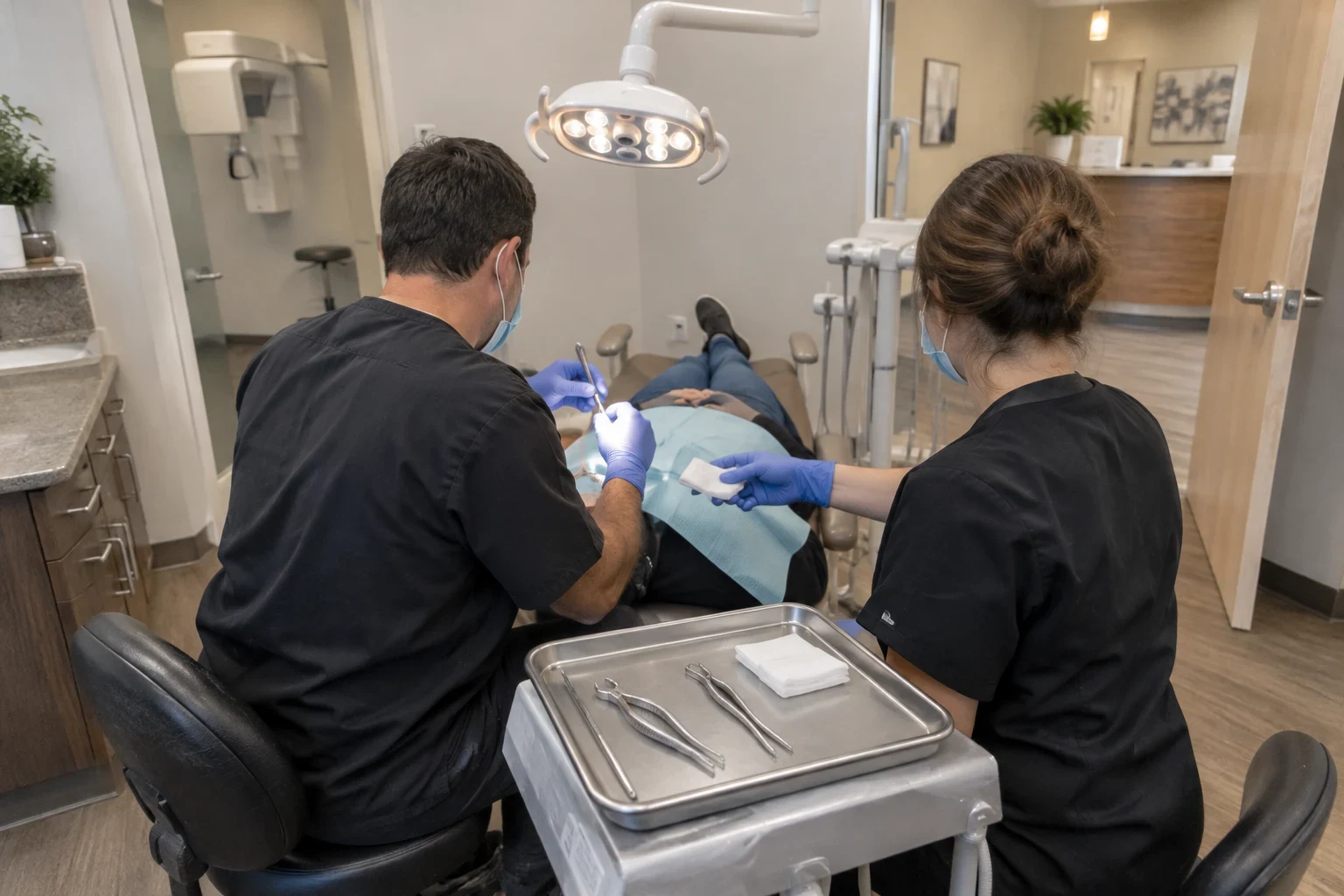
Extractions
Careful removal of teeth that can't be saved, with a plan for replacement and a follow-up check while the site heals.
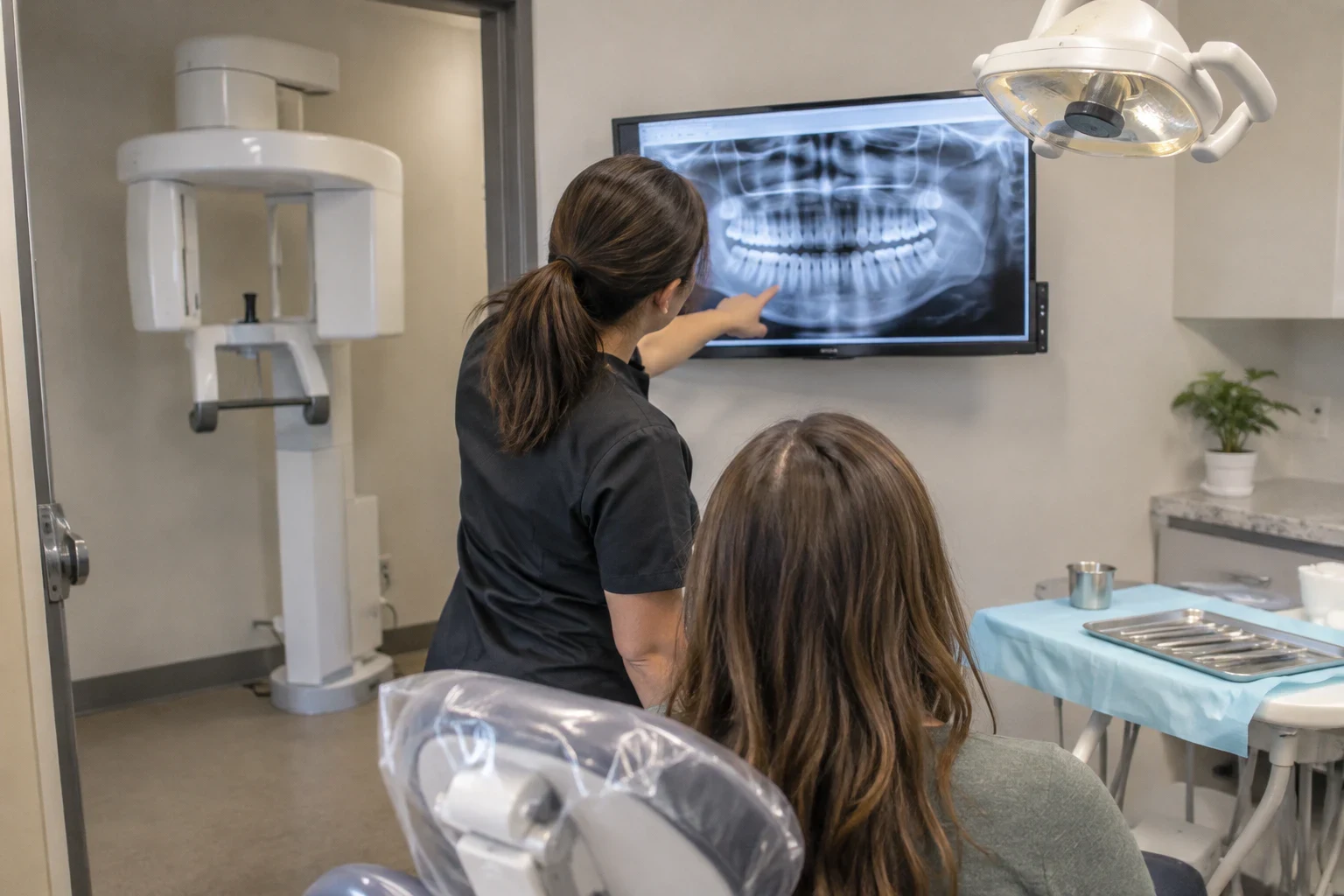
Wisdom Teeth Removal
Careful removal of impacted or troublesome wisdom teeth, planned from 3D imaging, with clear care instructions and a follow-up check while you heal.
How We Work With Patients
Good dentistry is half the work. The other half is what happens in the weeks and years that follow, and we treat that part as seriously as the procedure itself.
- We call to check on you
- A few days past an implant, extraction or root canal, we reach out to ask how healing is going. If something feels off, we want to hear about it early, not at your next cleaning six months from now.
- Care instructions you can use
- You leave with written instructions specific to your treatment: what to eat for the first few days, how to rinse, and which brush or water flosser suits an implant crown. We walk through them in the chair so nothing is a surprise later.
- Plans built on a 3D scan
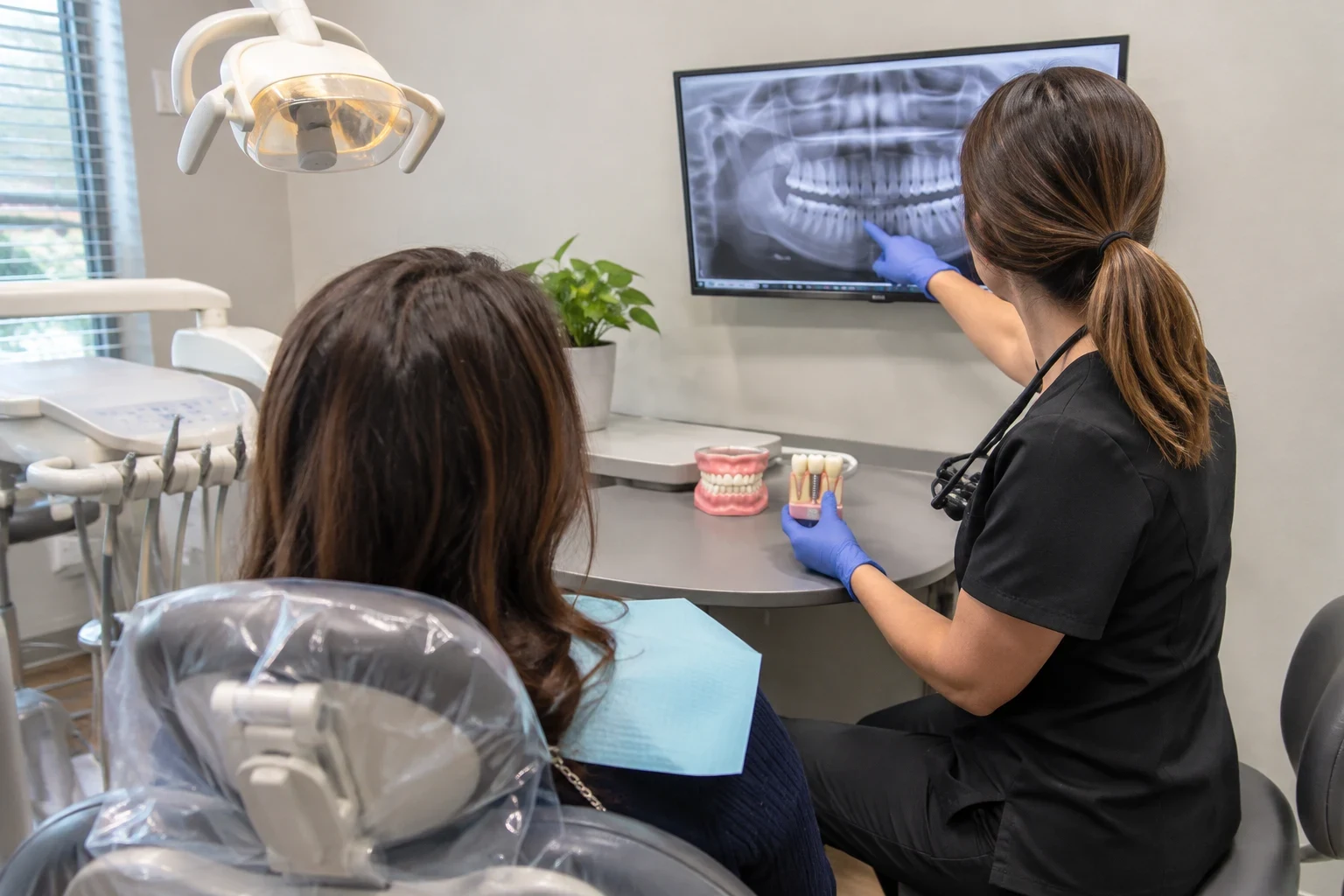
- When an implant is on the table, a CBCT scan shows the height and width of your bone and where the nerves sit. That lets us tell you up front whether you need a bone graft instead of discovering it mid-procedure.
- An honest save-or-remove answer
- If a root canal and crown can keep your natural tooth for years, we say so before recommending an extraction. You see the X-rays and hear the reasons for each option.
- Clear ways to pay
- If you carry a PPO, there is a good chance we already work with it, since our office participates in 15+ major PPO networks. Patients without coverage have the option of our in-house membership plan for routine visits. Bigger treatment can be paid off across as many as 24 months at 0% interest, and checking for preapproval has no effect on your credit score.
What to Expect From First Visit to Follow-Up
Each stage has a clear purpose, and you know what comes next before you leave the office.
- 1
Focused evaluation
For $25, we examine your whole mouth thoroughly and take digital X-rays. If the case calls for it, we add a CBCT scan, then sit down with you for treatment planning and a consultation. We look at the tooth that brought you in and the health of the mouth around it.
- 2
A written treatment plan
We go over your options, the timeline and the cost in plain terms. You can take the plan with you, check it against your insurance and call us with questions before deciding.
- 3
Treatment, one stage at a time
Implant placement is done with local anesthesia, and most patients describe pressure rather than pain. The post then bonds with the bone over a few months while you wear a temporary tooth when appropriate.
- 4
The final restoration
Once the implant is stable, we fit the abutment and your permanent crown or denture, checking how it meets your other teeth so your bite feels natural.
- 5
Check-ins and long-term care
We follow up at each stage, by phone or video when an office visit is not needed. Regular cleanings let us watch the gum line around implants, where trouble shows up first.
What Shapes the Cost of Your Treatment
No two mouths are priced the same, because no two start from the same place. A single implant in healthy bone is a very different plan from a full arch placed after years of missing teeth. We explain every line of your treatment plan before anything begins, and we review your insurance benefits or financing options with you.
Your estimate is written once your evaluation is complete and we have X-rays and, when needed, a CBCT scan. If the plan changes during treatment, we explain why and review the cost with you before going ahead.
- Number of teeth involved
- One implant, an implant bridge and an implant-supported denture each use different numbers of posts and different restorations on top.
- Bone and gum condition
- Bone shrinks once a tooth is lost. If the scan shows too little to hold a post securely, a bone graft or sinus lift may come first, and that adds a step and healing time.
- Extractions before placement
- A failing tooth may need to come out before an implant goes in. Sometimes the post can be placed the same visit; sometimes the site needs to heal first.
- Restoration material
- Crowns and dentures come in different materials, such as zirconia, porcelain and acrylic. Each wears, looks and feels a little differently, and we show you samples so you can compare.
- Insurance and payment path
- Your PPO benefits, our membership plan or a financing schedule will shift how much you cover yourself and how the payments are spaced. We work through those numbers together with you.
Patients We See Around Lake Dallas
Our office serves Lake Dallas and the surrounding towns along the lake and the I-35E corridor. Patients regularly come to us from Hickory Creek, Corinth, Shady Shores and Oak Point, as well as Highland Village, Denton, Lewisville, Flower Mound, Little Elm and The Colony. Treatment happens at our office, and many check-ins can be handled by phone or video.
- Lake Dallas
- Hickory Creek
- Corinth
- Highland Village
- Oak Point
- Shady Shores
- Denton
- Lewisville
- Flower Mound
- Little Elm
- The Colony
If you live a little farther out, call and ask. We can talk through your situation and plan visits so you make as few trips as possible.
Questions Patients Ask Us
- How much do dental implants cost?
- It depends on how many teeth are being replaced, the condition of your bone and the restoration you choose. A single implant and a full-arch plan are priced very differently. Your $25 focused evaluation gives us the X-rays and scan needed to write an accurate, itemized estimate.
- Do you take my dental insurance?
- Quite possibly, if your coverage is a PPO. Our office participates in 15+ major PPO networks. Have your plan name handy when you phone, and we can confirm whether we are in-network and help you read what your benefits should cover.
- What if I don't have insurance?
- Our in-house membership plan is designed for uninsured patients and covers routine preventive care. For larger treatment, you can pay over a period of up to 24 months with no interest charged. Finding out whether you prequalify will not affect your credit score.
- Does getting an implant hurt?
- The area is fully numbed with local anesthesia, so most patients feel pressure rather than pain during placement. Some soreness in the days that follow is common and usually managed with over-the-counter pain relievers. We check in once you are home to see how you are healing.
- How long does the implant process take?
- Plan on a few months from placement to final crown, because the bone needs time to bond with the post. If you need a bone graft or an extraction first, that adds healing time. We map out the full timeline before you start.
- My denture slips. Can implants help?
- Often, yes. A denture can be made to clip onto a small number of implant posts, which keeps it steady when you chew and speak. Whether that works for you depends on your bone, which the CBCT scan at your evaluation will show.
- How do I care for an implant once it's finished?
- Brush twice a day with a soft brush, and clean around the implant daily with floss, a floss threader or a water flosser. Keep your regular cleanings so we can watch the gums around the post. If you grind your teeth at night, we may suggest a night guard to protect the crown.
- I'm a new patient. What's the best way to start?
- If you have a specific problem tooth or missing teeth, the $25 focused evaluation is the right first step. If you mainly need a checkup, our $89 new patient special includes a full exam and cleaning. Either way, you get your appointment set by phone.
Start With a Clear Plan for Your Smile
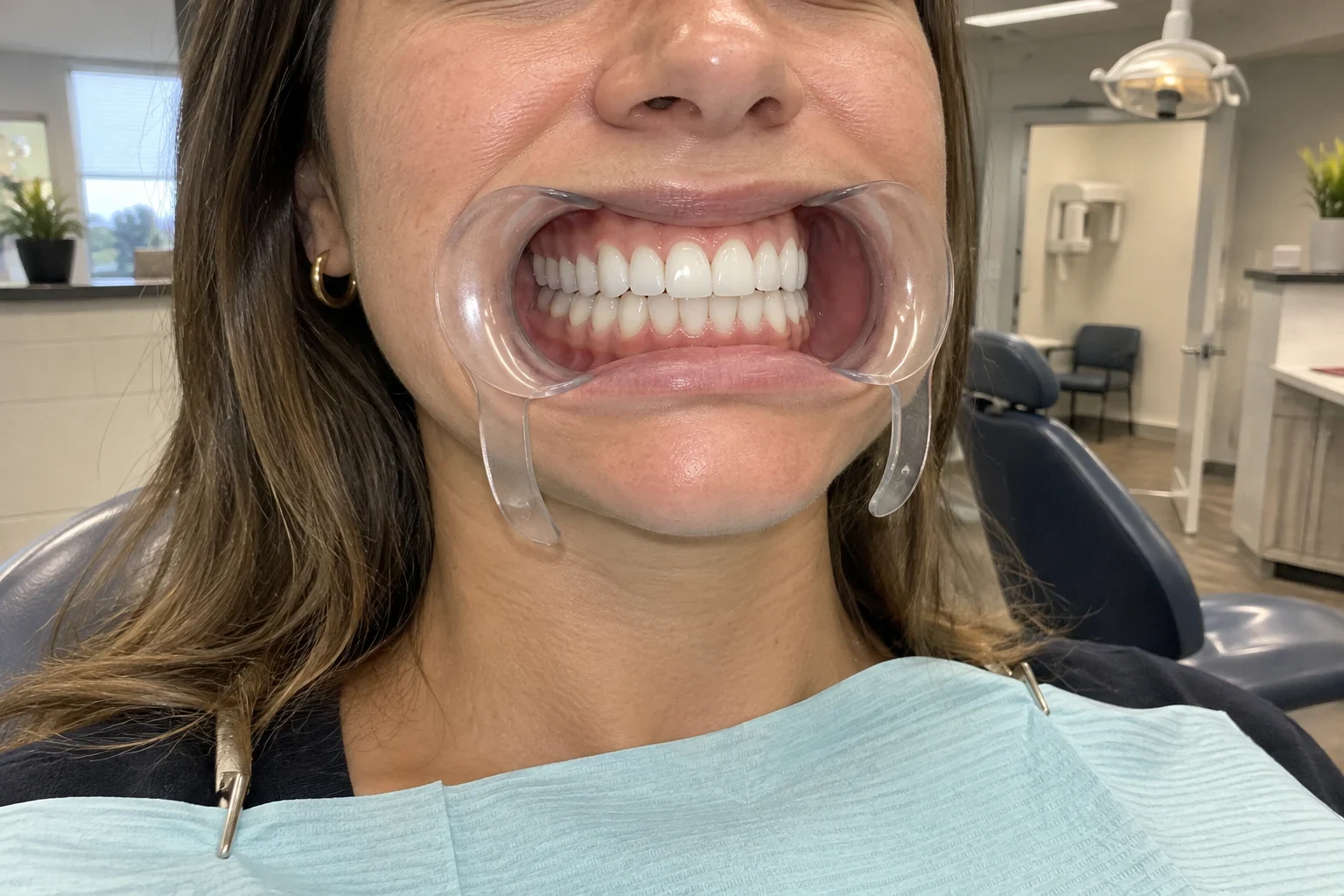
Your first visit gives you X-rays, a scan if needed and a straight answer on your options. Once you've healed, we keep checking in.